
The Healing Process: Part 2

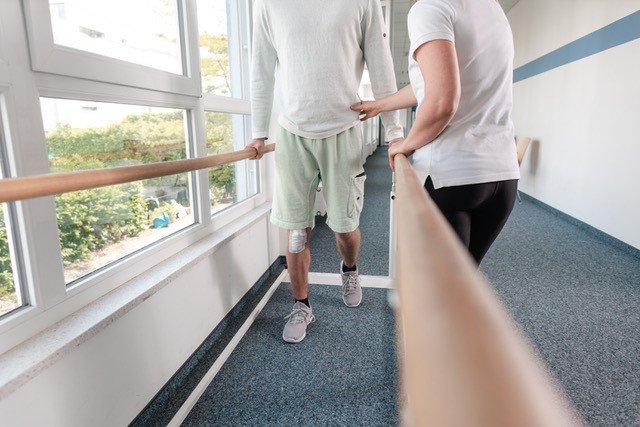
In today’s world of Instant Messaging and next-day deliveries, individuals often have similar expectations for their body’s healing process. Mind over Matter typically allows about a 2 week time-frame, after which a person thinks they should be better and ready to go.
Our body does not always respond and heal like we think it should. Healing from an injury or surgery follows a timeline that is determined by nature – not willpower.
In Healing Process Part 1 we discussed age, sleep, and hydration. In Healing Process Part 2 we discuss the expected healing time for the various structures in our body. Using this information can guide your expectations and plan your eventual return to activity.
HEALING TIMES:
BONE
8 to 10 weeks for fracture and up to an additional 3 years to achieve normal density (this explains why a fractured ankle can be painful after prolonged walking/running several years later).
LIGAMENTS
When torn or surgically cut, it takes 6 weeks for “weak” healing, another 6 weeks for that structural healing to be strong. When a ligament is not injured, turnover time is 300 to 500 days. Turnover rate refers to the continuous process of loss and replacement within living systems (such as with cells, tissue, etc.). It is important to know when wearing a brace to correct a hypermobile/lax joint.
NERVE
2 to 4 years. In the initial months, healing nerves can be very painful. Often the nerve pain manifests as muscle spasm, eitehr in the form of a constant cotraction, or via a sudden “Charlie horse” type spasm that is momentarily debilitating.
INTERVERTEBRAL DISCS
6 months, depending on the level of degenerative changes. In the presence of a herniated disc in the neck with arm pain, it takes 4 months for the arm symptoms to resolve. For teh lumbar spine, it takes 6 to 10 months for leg symptoms to resolve. In instances of a clinical hypermobility, it takes 2 years to stabilize.
IMMOBILIZATION OF ANY JOINT
Note that if the joint undergoes a period of immobilization for even a minimum of one week, it will be one year before the joint is cmopletely normal again on a cellular level. Because most joints are immobilized after surgery, expect to feel “completely normal” at 1 to 2 years after surgery.
MUSCLE
6 weeks for initial healing and another 12 weeks to reach maximal strength.
CARTILAGE
With limited ability to heal on its own due to lack of blood and nerve supply, cartilage damage often requires surgical intervention. In order for surgery to be successful, the individual needs to stay off the joint while maintaining constant passive motion (CPM) for at least 8 hours/day for 6-8 weeks following the procedure. After that time frame it takes another 9-18 months before a person can return to their normal, active lifestyle. The joint continues to heal and improve up to 7 years after the initial injury. [Vermillion, Doug MD (2010, July 17). Telephone interview.]
If the injury does reach a point at which it will attempt to repair itself (because the damage has reached the bone), the strucuture will be reformed with fibrocartilage rather than the original hyaline cartilage. Fibrocartilage is denser and more rigid than hyaline cartilage, making it less flexible and therefore more susceptible to damage from loud and everyday activities.