
Common Causes of Tingling in Cyclists: “Double Crush”
Longevity in sport and fitness can be facilitated through proactive intervention. If you consistently ski and bike, attention paid to the shoulder girdle and spine before an injury can be the difference between stability and dysfunction. Try these two simple activities out and, as always, don’t hesitate to consult with our physical therapists at Advanced Physical Therapy if you feel that your mobility and strength are limiting your ability to fully enjoy the outdoors.
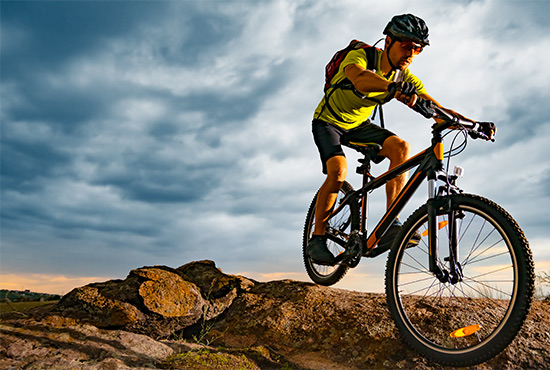
A common experience in cyclists is tingling in the little finger, fingertips, or sometimes throughout the arm. It’s helpful to know a bit about how nerves work.
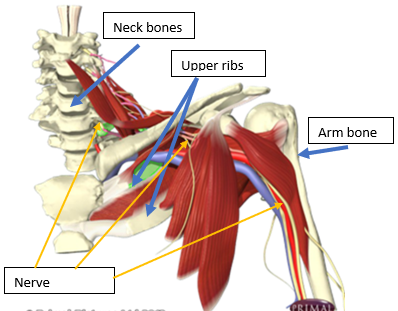
Let’s take a quick look at the human anatomy: Nerves leave the neck through narrow pathways, the first of which is the bony ‘foramen’ of the spine, and thereafter they course through dynamic ‘gateways’ that consist of several muscular, ligamentous, and bony tunnels as they make their way to the tips of your fingers.
If the mobility of any of these pathways is limited the nerves can become irritated, which will lead to symptoms of pain, tingling, numbness or burning in the arm, hand or fingers. If two or more pathways become even slightly restricted, it is highly likely that the athlete will experience at least the tingling or pins and needles sensations —something commonly referred to as double crush syndrome.
Here are some simple self-care strategies that you can add to your arsenal of self-care to keep your ribs and thoracic spine moving and optimize the neural pathways—even if you spend prolonged times in the saddle.

Up first is a first rib and scalene muscle self-mobilization technique. After the nerves exit the spine, they pass through the scalene muscles then run up and over the first rib. In order to improve the mobility of the first rib, and lengthen the scalene muscles, you will need a strap of some sort (a long belt, single sheet or tablecloth, or even ratchet strap will do). Place one end of the strap under the buttock of the side you are going to mobilize; sit on it and bring the length of the strap up and over your back, draping it over the upper trapezius muscle and pulling it down toward the opposite hip pocket with both hands. Sit tall, make sure the belt is placed halfway between your neck and the tip of your shoulder, then exhale while pulling the strap further toward that opposite hip pocket. This alone is a great self-mobilization for the first rib. You can add a slight stretch to the scalenes by gently sidebending your head away from the strap. Hold this position for 30-60 seconds and repeat 2-3 times on each side. This should always feel good; do not continue if painful. Be aware that this simple self-care maneuver can actually cause tingling in the fingers when you are performing it; when this happens hold the position until the tingling goes away. This is called a ‘release phenomenon’ and occurs when the circulation returns to the nerves as the pathways (here it would be the space between the scalenes, and the space between the 1st rib and the collar bone) are opened.
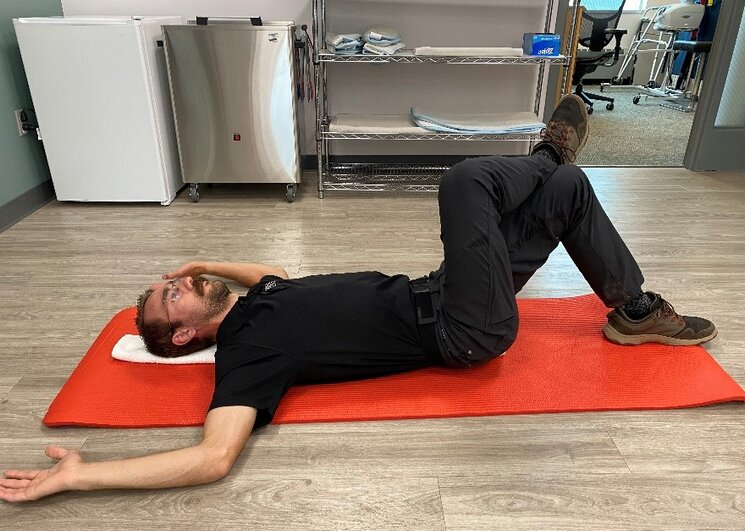
Following the first rib mobilization, you can strengthen your upper back to maintain the mobility of your spinal column and open another neural pathway between the upper arm bone and the upper ribs. Strengthening the upper back (scapulothoracic) musculature will have the added bonus of providing additional postural support. To strengthen your scapulothoracic musculature, and actively stretch your anterior chest musculature, begin by placing a rolled-up bath towel on the ground and lying on top of it lengthwise (the towel should support your head and run along your neck and thoracic spine). From here, bring your shoulders out to the side and bend your elbows to imitate the “field goal” sign. If you cannot bring your hands to the floor place yoga blocks or towels on the ground beneath your wrists for support. Keeping your spine and body still, push your hands back into the ground, blocks, or towels and hold for a count of 6-10 seconds. Repeat 6-10 times for a good activation of this posterior chain musculature and active release of your pectoralis major and minor. Note, if you are arching your back during this exercise, put your ankle on the opposite knee to help keep the back flat.
Longevity in sport and fitness can be facilitated through proactive intervention. If you consistently ski and bike, attention paid to the shoulder girdle and spine before an injury can be the difference between stability and dysfunction. Try these two simple activities out and, as always, don’t hesitate to consult with our physical therapists at Advanced Physical Therapy if you feel that your mobility and strength are limiting your ability to fully enjoy the outdoors.