
Drills for running on uneven surfaces

to prevent injury and maintain awareness of the surroundings in a way that requires looking up as well as looking down, navigating abrupt changes in the ground surface needs to be automatic.
Whether a trail runner or just trying to avoid a charging moose during your daily walk, the ability to run swiftly regardless of terrain is essential for optimal and safe living in Alaska. Take one extreme – Mount Marathon – as an example; in this race, runners navigate pavement, tree roots, rock walls, dirt, shale, snow, and scree. To prevent injury and maintain awareness of the surroundings in a way that requires looking up as well as looking down, navigating abrupt changes in the ground surface needs to be automatic. This occurs primarily via reflex, and these reflexive balance strategies can be improved through specific training.
As a child, balance reflexes at the ankle, hip, and foot are fine-tuned within the brain and spinal cord; the more challenged with sports or dance, for instance, the better the reflexes. With age, injury or even seasonal deconditioning these ‘proprioceptive’ reflexes can weaken. Fortunately, proprioception training with a specific focus on the ankle and foot is one of the most successful interventions available to restore and/or improve the speed of these reflexes.

Proprioception training involves challenging either static or dynamic movement with the following variations: stable versus unstable support, focus versus distraction, eyes open for external feedback versus eyes closed for internal feedback. Each of these variations, when applied either alone or in combination test balance and increase the body’s reliance on foot and ankle reflexes.
By improving balance through foot and ankle reflex training, one can move through life with greater confidence and a surer response no matter what the activity or terrain. Creating your own proprioception exercises to challenge and improve your balance can be simple and fun. Consider simply doing any activity by decreasing your support, such as performing a self-care or household activity while standing on one foot (shaving, brushing teeth, vacuuming). However, there may be times where balancing on one foot may be too difficult; if so, try standing in tandem and create a proprioceptive challenge by keeping eyes closed or looking alternately right and left, such as during an upper body work out.
When these activities become easy, take the proprioceptive training to the next level by standing on slanted, unstable (such as a rolled towel or foam), or narrow surfaces to improve your foot and ankle reflexes in alternative foot positions (simulating boulders and off camber slopes). Whether standing on one foot or on both feet, practice two different positions: flat foot as well as weight bearing only on the ball of the foot with an unsupported heel.
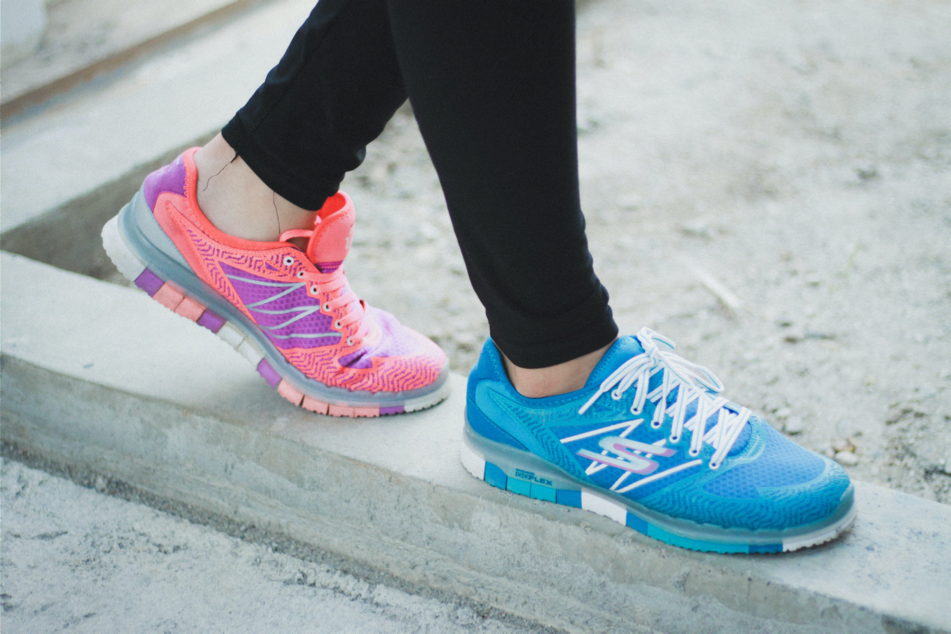
NOTE: Rather than standing directly on a dynamic rubber surface like a bosu ball or dyna-disc, runners should best work on improving foot and ankle reflexes while standing on firm surfaces . Foot and ankle reflexes develop more successfully if they are trained in a specific manner that mimics reality. When running, the foot contacts firm ground and joints have limited freedom of motion in such an environment, foot and ankle muscles have fewer joint positions to generate stability.
On the other hand, a soft rubber surface is not replicated in nature; on such a surface, no such limitation exists, and the foot and ankle joints can articulate and move freely without difficulty.
However, there are a number of ways that you can make a firm surface more dynamic, including putting a piece of plywood on-ironically-a bosu ball!