
How Chronic Illness Impacts Balance and Increases Fall Risk
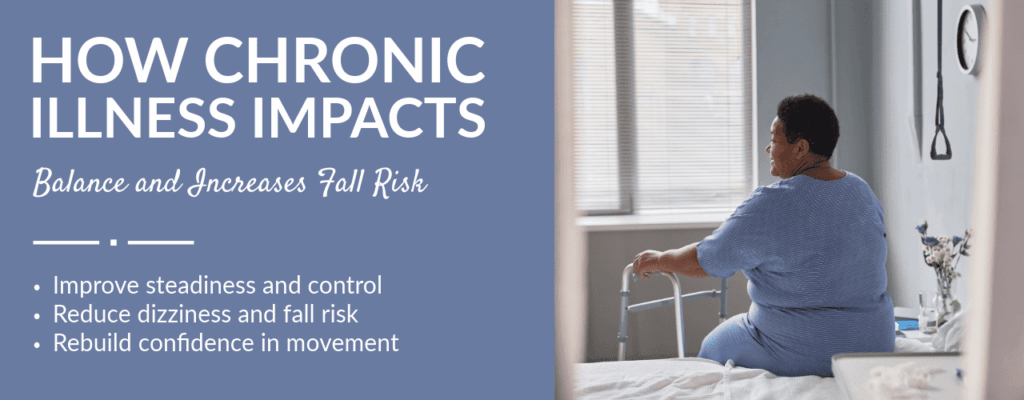
Many people with chronic conditions notice they feel unsteady or dizzy when walking, standing, or turning too quickly. These changes are not just a regular part of aging! In fact, they often stem from the direct link between chronic illness and balance. Understanding this connection helps prevent falls and supports long-term mobility.
Why Balance Problems Are Common with Chronic Illness
Balance relies on your body’s ability to gather and process information from three systems:
- The eyes provide visual input for orientation.
- The muscles and joints send feedback to the brain about body position (proprioception).
- The inner ear senses motion and position and sends signals about it to your cerebellum (together, they comprise the vestibular system).
When chronic illness disrupts these systems, the brain receives mixed messages, leading to unsteadiness, dizziness, and falls.
Common Conditions That Affect Stability
Chronic illness and balance are closely linked across many body systems. Here are some examples:
Diabetes
- High blood sugar can damage nerves in the feet and legs, a condition called peripheral neuropathy. When sensation decreases, it becomes harder to sense foot placement and maintain balance on uneven surfaces.
Arthritis
- Joint stiffness and pain change how people walk and shift weight. Compensating for sore joints can alter posture and reduce stability.
Heart Disease and Low Blood Pressure
- Poor circulation or medication side effects can cause dizziness, especially when standing up quickly. This sudden drop in blood flow can lead to lightheadedness or fainting.
Neurological Disorders
- Conditions such as Parkinson’s disease or multiple sclerosis interfere with coordination and muscle control, resulting in slower reaction time and a higher risk of falls.
Vision Impairment
- Many chronic illnesses, including diabetes and glaucoma, affect eyesight. Poor vision makes it difficult to judge distance and detect hazards while walking.
How Balance Changes Lead to Falls
When your balance is impaired, your fall risk increases. However, it’s important to remember that falls rarely happen from one cause alone. Instead, multiple small changes combine to increase risk. For example:
- Weakened muscles make it harder to recover from a trip or misstep.
- Slower reflexes delay reaction time.
- Postural changes, such as stooping or leaning, shift the body’s center of gravity.
- Medication side effects can include dizziness or fatigue.
Many of the older adults who fall each year have at least one chronic health condition. Early recognition and treatment of balance changes can significantly reduce this risk.
The Role of Physical Therapy in Restoring Balance
Physical therapy can help individuals with chronic illnesses retrain their balance systems and move safely again. At Advanced Physical Therapy, our physical therapists evaluate each person’s unique challenges and create personalized balance programs.
Treatment may include:
- Mobility training to restore your normal range of motion.
- Strengthening exercises for the legs, hips, and core.
- Gait training to improve walking stability and confidence.
- Vestibular rehabilitation to address dizziness or vertigo.
- Education on fall prevention and safe movement strategies at home.
- Environmental modifications, such as using non-slip mats and proper lighting
Addressing the Fear of Falling
Many people with chronic illness experience anxiety after a fall or near-fall. This fear can lead to reduced activity, which weakens muscles and contributes to even more balance problems over time.
Fortunately, supportive, consistent therapy can help address these fears while also helping you rebuild strength and coordination.
Taking the First Step Toward Better Balance
Living with a chronic illness doesn’t mean you have to accept dizziness or instability as part of daily life. With professional help, you can strengthen your body, retrain your balance, and lower your risk of falling.
If you’re noticing changes in steadiness or mobility, contact Advanced Physical Therapy today to schedule an evaluation. Our physical therapists specialize in treating balance challenges related to chronic illness and balance issues, helping you move safely and confidently again.